Affiliate Disclosure: As an Amazon Associate we earn from qualifying purchases. Some links may earn us a commission at no cost to you.

Best CPU for Hearts of Iron IV (2026): 5 Picks by Tier
Hearts of Iron IV runs fine in 1936. The trouble starts around 1943, when hundreds of divisions are fighting on four fronts and speed 5 crawls like speed 3. That slowdown is not a graphics problem. Every in-game hour, the CPU has to resolve combat, supply, production and AI planning for every country on the map, and frame rate has little to do with it.
So we ranked these CPUs by how fast they push a Paradox simulation forward, not by FPS. Five picks, ordered by tier.
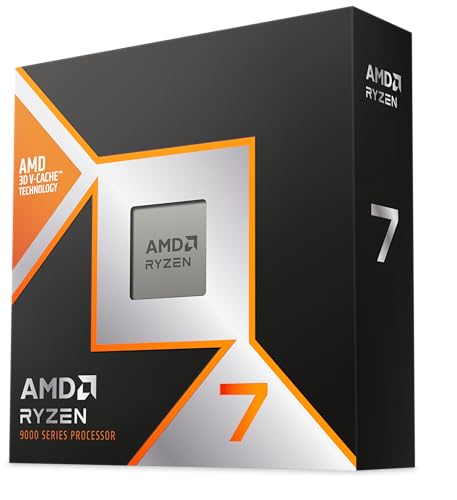
Our top pick: AMD Ryzen 7 9800X3D
The Ryzen 7 9800X3D posted the fastest Paradox simulation time we could find from any reviewer, and its 96 MB of L3 cache plus a 5.2 GHz boost is the pairing a late-game world war leans on.
Quick picks
Pick | CPU | Cores / threads | Best at | Buy |
|---|---|---|---|---|
Best Overall | 8 / 16 | Fastest late-game ticks | ||
Best Value | 8 / 16 | X3D-level simulation for less | ||
Best Premium | 16 / 32 | Strategy plus streaming or work | ||
Best Budget | 6 / 12 | Early and mid game, AM5 upgrade path | ||
Editor's Pick | 8 / 16 | Mixed libraries beyond Paradox |
Best Overall
- CPU
- Cores / threads
8 / 16
- Best at
Fastest late-game ticks
Best Value
- CPU
- Cores / threads
8 / 16
- Best at
X3D-level simulation for less
Best Premium
- CPU
- Cores / threads
16 / 32
- Best at
Strategy plus streaming or work
Best Budget
- CPU
- Cores / threads
6 / 12
- Best at
Early and mid game, AM5 upgrade path
Editor's Pick
- CPU
- Cores / threads
8 / 16
- Best at
Mixed libraries beyond Paradox
Specs at a glance
CPU | Cores / threads | Boost clock | L3 cache | TDP | Architecture |
|---|---|---|---|---|---|
8 / 16 | 5.2 GHz | 96 MB | 120 W | Zen 5 | |
8 / 16 | 5.5 GHz | 32 MB | 65 W | Zen 5 | |
16 / 32 | 5.7 GHz | 128 MB | 170 W | Zen 5 | |
6 / 12 | 5.4 GHz | 32 MB | 65 W | Zen 5 | |
8 / 16 | 5.0 GHz | 96 MB | 120 W | Zen 4 |
- Cores / threads
8 / 16
- Boost clock
5.2 GHz
- L3 cache
96 MB
- TDP
120 W
- Architecture
Zen 5
- Cores / threads
8 / 16
- Boost clock
5.5 GHz
- L3 cache
32 MB
- TDP
65 W
- Architecture
Zen 5
- Cores / threads
16 / 32
- Boost clock
5.7 GHz
- L3 cache
128 MB
- TDP
170 W
- Architecture
Zen 5
- Cores / threads
6 / 12
- Boost clock
5.4 GHz
- L3 cache
32 MB
- TDP
65 W
- Architecture
Zen 5
- Cores / threads
8 / 16
- Boost clock
5.0 GHz
- L3 cache
96 MB
- TDP
120 W
- Architecture
Zen 4
How fast each pick runs a Paradox simulation
No reviewer outlet benchmarks Hearts of Iron IV itself. The closest published test is Gamers Nexus's Stellaris simulation run, which times how long a late-game Paradox save takes to advance a fixed stretch of days. Same publisher, same day-tick grand strategy design, and the same thing you feel in HOI4 when 1944 drags. Lower is faster.
CPU | Simulation time | What that means in a late-game save |
|---|---|---|
25.8 s | The shortest wait per stretch of days of any pick | |
27.6 s | Within about 5% of the 9800X3D, with twice the cores | |
30.3 s | Level with the 7800X3D without any stacked cache | |
About 31 s | The 9800X3D cuts this time by 17.6% | |
Not published | No reviewer has run this test on it |
- Simulation time
25.8 s
- What that means in a late-game save
The shortest wait per stretch of days of any pick
- Simulation time
27.6 s
- What that means in a late-game save
Within about 5% of the 9800X3D, with twice the cores
- Simulation time
30.3 s
- What that means in a late-game save
Level with the 7800X3D without any stacked cache
- Simulation time
About 31 s
- What that means in a late-game save
The 9800X3D cuts this time by 17.6%
- Simulation time
Not published
- What that means in a late-game save
No reviewer has run this test on it
How we picked
Three specs decide how a Paradox game ages, in this order.
Per-core speed comes first. One main thread sets the pace for the daily tick and hands work out to the others, so a chip with high clocks and modern IPC wins even before cache enters the picture. That is why the 9700X, with no stacked cache at all, matches the previous-generation 7800X3D in the Stellaris test. If you want to see where a given processor holds back your graphics card in other games, our bottleneck calculator shows the frames lost at 1080p, 1440p and 4K.
Cache comes second. A late-game save carries a large, scattered working set of provinces, divisions, supply nodes and AI plans, and every miss on the main thread waits on system memory. The 96 MB X3D chips keep more of that close, which is how the 9800X3D finishes the Stellaris run 17.6% ahead of the 7800X3D and well clear of the 9700X. We cover the wider trade in X3D against the non-X3D ladder. City builders follow the same rule, which is why our best CPU for Cities: Skylines II picks also lead with X3D.
Core count comes third. Six modern cores run the game, and eight cover a heavy campaign with a browser and Discord open. Past that, extra cores help streaming and other work more than they help HOI4. Our breakdown of how many cores a gaming build needs goes deeper.
The GPU barely figures. HOI4 is a map game, and a mid-range graphics card renders it at high frame rates at 1440p. Spend on the CPU first, then the rest of the build. Our guide on how to choose a CPU and motherboard covers the platform side.
Best Overall: AMD Ryzen 7 9800X3D
Specs
Cores / threads | 8 / 16 |
Boost clock | 5.2 GHz |
Base clock | 4.7 GHz |
L3 cache | 96 MB (3D V-Cache) |
TDP | 120 W |
Socket | AM5 |
Architecture | Zen 5 |
Cores / threads
8 / 16
Boost clock
5.2 GHz
Base clock
4.7 GHz
L3 cache
96 MB (3D V-Cache)
TDP
120 W
Socket
AM5
Architecture
Zen 5
What it does well
It posts the shortest Paradox simulation time we could find: 25.8 seconds in Gamers Nexus's Stellaris run, against 30.3 for the 9700X. In HOI4 terms, that gap is the difference between a 1944 that moves and a 1944 you watch.
The 96 MB L3 pool does the heavy lifting. Division, supply and AI state stays on chip instead of waiting on DRAM, and the 5.2 GHz boost keeps the main simulation thread moving. Strategy and 4X games sit on the short list of workloads where we recommend X3D actively, and a world-war save in its final years is the clearest case for it.
What you give up
Eight cores is the ceiling. If you also render video or compile code, the 9950X3D is the better tool.
It also costs well over the 9700X, which gets you most of the way in early and mid game. The premium buys late-game time, not a smoother 1937.
Who it's for
Players who push world-conquest runs toward 1948, host multiplayer lobbies where the slowest machine sets the pace, or run heavy AI overhaul mods. Pair it with a board from our motherboards for the 9800X3D guide and the platform has room for several more Paradox releases.
Best Value: AMD Ryzen 7 9700X

Specs
Cores / threads | 8 / 16 |
Boost clock | 5.5 GHz |
Base clock | 3.8 GHz |
L3 cache | 32 MB |
TDP | 65 W |
Socket | AM5 |
Architecture | Zen 5 |
Cores / threads
8 / 16
Boost clock
5.5 GHz
Base clock
3.8 GHz
L3 cache
32 MB
TDP
65 W
Socket
AM5
Architecture
Zen 5
What it does well
This is the surprise of the lineup. At 30.3 seconds in the Stellaris test, the 9700X lands level with the 7800X3D, and it does it on clock speed and Zen 5 IPC instead of stacked cache.
It ships at a 65 W default, so a basic tower cooler keeps it quiet through a long session. For a player who mostly runs single-player campaigns and finishes them, that is most of the late-game speed for clearly less money.
What you give up
The last stretch of a heavy save. The 9800X3D finishes the same Stellaris run about 15% faster, and that gap grows as division counts climb.
Outside Paradox games, the 32 MB L3 also costs frames in cache-hungry shooters and MMOs, where the X3D chips pull ahead. PBO raises sustained clocks if you want more, at the cost of extra heat and a larger cooler than the 65 W default needs.
Who it's for
Strategy-first players building a new AM5 machine who would rather put the difference toward the GPU, more RAM or a faster SSD. If you are torn between this and the X3D, our Ryzen 7 9700X vs 9800X3D comparison walks through the trade.
Best Premium: AMD Ryzen 9 9950X3D

Specs
Cores / threads | 16 / 32 |
Boost clock | 5.7 GHz |
Base clock | 4.3 GHz |
L3 cache | 128 MB total |
TDP | 170 W |
Socket | AM5 |
Architecture | Zen 5 |
Cores / threads
16 / 32
Boost clock
5.7 GHz
Base clock
4.3 GHz
L3 cache
128 MB total
TDP
170 W
Socket
AM5
Architecture
Zen 5
What it does well
Gamers Nexus timed it at 27.6 seconds in Stellaris, down from 32.3 on the plain 9950X. That is close to 9800X3D speed with sixteen cores behind it.
Those extra cores are the reason to buy it. Stream or record the campaign, run a map editor or mod tools in the background, or do real rendering and compile work on the same machine, and the simulation keeps its pace.
What you give up
In the same review, the 9800X3D still finished the Stellaris run about 5% faster. Only one of the two chiplets carries the stacked cache, so the game needs to land on the right cores, which AMD's chipset driver handles (reports suggest a fresh driver install fixes most misplaced threads).
It also draws up to 170 W and wants a large air cooler or a 280 mm AIO. For a pure strategy machine, that is money and heat with no return.
Who it's for
Players who stream or record long campaigns, heavy modders, and anyone whose strategy rig is also a work machine. Pure gamers should take the 9800X3D instead.
Best Budget: AMD Ryzen 5 9600X

Specs
Cores / threads | 6 / 12 |
Boost clock | 5.4 GHz |
Base clock | 3.9 GHz |
L3 cache | 32 MB |
TDP | 65 W |
Socket | AM5 |
Architecture | Zen 5 |
Cores / threads
6 / 12
Boost clock
5.4 GHz
Base clock
3.9 GHz
L3 cache
32 MB
TDP
65 W
Socket
AM5
Architecture
Zen 5
What it does well
It uses the same Zen 5 cores as the 9700X at a 5.4 GHz boost, and early and mid game at speed 5 run smoothly on it. Most of a 1936 to 1941 campaign never stresses it.
It also puts you on AM5. When late-game speed starts to matter, a later X3D chip drops into the same board with a BIOS update, no rebuild.
What you give up
No reviewer has published a Paradox simulation time for it, so we can't put a number on the late-game gap. What we can say is that six cores and 32 MB of L3 are exactly what a 1944 world war leans on hardest, and this chip has the least of both here.
If your saves routinely reach the end date, the 9700X is the smarter floor.
Who it's for
First builds, players who usually wrap up a campaign by 1943, and anyone planning a later X3D upgrade. At the time of writing, Amazon's buy box for this listing sat with a third-party seller, so check the seller before you order.
Editor's Pick: AMD Ryzen 7 7800X3D

Specs
Cores / threads | 8 / 16 |
Boost clock | 5.0 GHz |
Base clock | 4.2 GHz |
L3 cache | 96 MB (3D V-Cache) |
TDP | 120 W |
Socket | AM5 |
Architecture | Zen 4 |
Cores / threads
8 / 16
Boost clock
5.0 GHz
Base clock
4.2 GHz
L3 cache
96 MB (3D V-Cache)
TDP
120 W
Socket
AM5
Architecture
Zen 4
What it does well
In HOI4-style simulation it ties the 9700X. The reason to pick it is everything else in your library: MMOs in dense raids, sim racing, flight sims and competitive shooters, where the 96 MB cache keeps a lead the 9700X can't match.
A library heavy on sim and strategy titles is the case where we skip the mid-range Ryzen 7 conversation entirely and go straight to X3D. This is the chip that covers both sides of that library.
What you give up
Zen 4 clocks. Gamers Nexus measured the 9800X3D cutting its Stellaris simulation time by 17.6%, so a heavy late-game save is noticeably faster on the newer chip.
Stock has also thinned since the 9800X3D launched, and pricing moves week to week. When the two sit close in price, take the 9800X3D.
Who it's for
Players whose library mixes Paradox games with MMOs, sim racing or competitive shooters, and Ryzen 7000 owners who want a cache upgrade without a new board. For the same reasoning applied to flight sims, see our best CPU for Microsoft Flight Simulator 2024.
Bottom line
If you want the fastest late-game ticks, buy the Ryzen 7 9800X3D.
If you play Paradox games first and want most of that speed for less, buy the Ryzen 7 9700X.
If you stream, mod heavily or work on the same machine, buy the Ryzen 9 9950X3D.
If you are building on a tight budget and plan to upgrade later, buy the Ryzen 5 9600X.
If your library runs well beyond strategy games, buy the Ryzen 7 7800X3D.
FAQ
Does X3D cache help in Hearts of Iron IV?
Yes, in the late game. No outlet benchmarks HOI4 directly, but in Gamers Nexus's Stellaris simulation test the 9800X3D finished 17.6% faster than the 7800X3D and well ahead of the 9700X. A late-game save carries a large working set of divisions, provinces and AI state, and a bigger L3 keeps more of it close to the cores. Early in a campaign the difference is small, because the simulation load is light.
Is Hearts of Iron IV CPU bound or GPU bound?
CPU bound. The map renders easily on a mid-range graphics card, but each in-game hour the processor has to resolve combat, supply, production and AI decisions for every country. As division counts grow, that work grows with it, and the game slows down even though frame rate looks fine. Spend on the CPU first for this game.
How many CPU cores does Hearts of Iron IV use?
One main thread sets the pace, with some work spread across the others. Six modern cores run it well, and eight leave room for background apps or a stream. Beyond eight, extra cores mostly help other workloads. That is why per-core speed and cache matter more here than core count, and why the eight-core 9800X3D beats sixteen-core chips without stacked cache.
Why does Hearts of Iron IV lag in the late game?
Players and modders point to the number of divisions on the map, AI planning and combat calculations, all of which grow as the war spreads. Heavy AI overhaul mods raise the load further. A faster CPU with more cache shortens each tick, while cutting division counts with game rules or mods trims the work itself. Speed 5 simply runs as fast as the hardware allows.
What is the best CPU for Stellaris and other Paradox games?
The same chip. The Ryzen 7 9800X3D posted the fastest Stellaris simulation time in Gamers Nexus testing, and Europa Universalis and Victoria lean on the same kind of daily tick. The Ryzen 7 9700X is the value alternative. For a factory game that follows similar rules, see our best CPU for Factorio picks.
Is the 9800X3D worth it over the 7800X3D for HOI4?
For long campaigns, yes, when the price gap is small. Gamers Nexus measured a 17.6% shorter simulation time on the 9800X3D in Stellaris, which shows up in the final years of a heavy save. If you already own a 7800X3D, keep it, because the upgrade is not large enough to justify replacing a working chip.
Related Articles

Best CPU for Cities: Skylines II (2026): 5 Picks by Tier
The best CPU for Cities: Skylines II is the one that holds full simulation speed as your city grows. Five picks ranked by the city size each sustains.
Sep 18, 2026

Best CPU for Factorio (2026): 5 Picks Ranked by UPS
The best CPU for Factorio is the one that holds 60 UPS as your megabase grows. Five picks ranked by cache, clock speed and the base size each one sustains.
Nov 17, 2026

Best CPU for Anno 117: Pax Romana (2026): 5 Late-Game Picks
The best CPU for Anno 117: Pax Romana keeps a late-game province smooth. Five picks ranked on endgame save benchmarks, from X3D chips to a budget six-core.
Nov 18, 2026

X3D vs Non-X3D for Gaming (2026): 3 Picks by Player Type
X3D vs non-X3D for gaming: which Ryzen earns the cache premium. One pick each for esports, AAA at 1440p/4K, and sim or strategy, plus when to skip X3D.
Sep 8, 2026

How Many CPU Cores Do You Need for Gaming? 6 vs 8 (2026)
How many CPU cores do you need for gaming in 2026? Eight for most builds, six on a budget, 12 to 16 only if you stream or render. One Ryzen pick per lane.
Nov 15, 2026