Affiliate Disclosure: As an Amazon Associate we earn from qualifying purchases. Some links may earn us a commission at no cost to you.

Best CPUs for the RTX 5070 (2026): 5 Picks by Tier
The RTX 5070 is a 1440p card. At 1440p it runs out of headroom before any current six-core chip does, which means the CPU question for this build has a cheaper answer than most people expect.
That changes what you should buy. Size the processor to the resolution you actually play at, then put the difference into the panel, the memory kit, or a second drive. Below are five picks by tier, plus the one situation where spending up genuinely pays.
Our top pick: AMD Ryzen 5 9600X
The Ryzen 5 9600X finishes its share of every frame before the RTX 5070 finishes rendering it, at the settings a 1440p buyer plays at. Paying more buys frames the card cannot draw.

Quick picks
Pick | CPU | Best for | Buy |
|---|---|---|---|
Best Overall | 1440p 144Hz on a 5070 | ||
Best Value | Keeping the platform through the next GPU | ||
Best Premium | Sim, strategy, MMO, or 1080p 240Hz | ||
Best Budget | The cheapest AM5 seat that still feeds the card | ||
Editor's Pick | Streaming and editing with Quick Sync |
Best Overall
- CPU
- Best for
1440p 144Hz on a 5070
- Buy
Best Value
- CPU
- Best for
Keeping the platform through the next GPU
- Buy
Best Premium
- CPU
- Best for
Sim, strategy, MMO, or 1080p 240Hz
- Buy
Best Budget
- CPU
- Best for
The cheapest AM5 seat that still feeds the card
- Buy
Editor's Pick
- CPU
- Best for
Streaming and editing with Quick Sync
- Buy
Specs at a glance
CPU | Cores / threads | Boost clock | Cache | TDP | Socket |
|---|---|---|---|---|---|
6 / 12 | 5.4 GHz | 32 MB L3 | 65 W | AM5 | |
8 / 16 | 5.5 GHz | 32 MB L3 | 65 W | AM5 | |
8 / 16 | 5.2 GHz | 96 MB L3 | 120 W | AM5 | |
6 / 12 | 5.3 GHz | 32 MB L3 | 105 W | AM5 | |
20 (8P + 12E) | 5.3 GHz | 30 MB L3 | 65 W base | LGA1851 |
- Cores / threads
6 / 12
- Boost clock
5.4 GHz
- Cache
32 MB L3
- TDP
65 W
- Socket
AM5
- Cores / threads
8 / 16
- Boost clock
5.5 GHz
- Cache
32 MB L3
- TDP
65 W
- Socket
AM5
- Cores / threads
8 / 16
- Boost clock
5.2 GHz
- Cache
96 MB L3
- TDP
120 W
- Socket
AM5
- Cores / threads
6 / 12
- Boost clock
5.3 GHz
- Cache
32 MB L3
- TDP
105 W
- Socket
AM5
- Cores / threads
20 (8P + 12E)
- Boost clock
5.3 GHz
- Cache
30 MB L3
- TDP
65 W base
- Socket
LGA1851
Where the CPU choice actually changes the result
Target | What limits you | Does the CPU change the frame rate? | Pick |
|---|---|---|---|
1440p high, mixed AAA library | The RTX 5070 | Barely | |
1440p, sim / strategy / MMO library | CPU cache | Yes, clearly | |
1080p 240Hz competitive | The CPU | Yes, at the ceiling | |
1440p plus a sustained encode | Core count | Yes, for the encode |
1440p high, mixed AAA library
- What limits you
The RTX 5070
- Does the CPU change the frame rate?
Barely
- Pick
1440p, sim / strategy / MMO library
- What limits you
CPU cache
- Does the CPU change the frame rate?
Yes, clearly
- Pick
1080p 240Hz competitive
- What limits you
The CPU
- Does the CPU change the frame rate?
Yes, at the ceiling
- Pick
1440p plus a sustained encode
- What limits you
Core count
- Does the CPU change the frame rate?
Yes, for the encode
- Pick
CPU reviews exist to measure CPUs, so reviewers pair them with the fastest card available and drop the resolution until the graphics card stops being the limit. Tom's Hardware ran the Ryzen 5 9600X at 1080p on an RTX 4090 and measured 163 FPS across their gaming suite, rising to 175 FPS with Precision Boost Overdrive enabled. Those are real numbers from a real rig. They are also a rig nobody reading this owns.
Swap that card for a 5070 and move to 1440p and the picture inverts. The graphics card becomes the thing every frame waits on, and the processors separate by margins you need an overlay to see. The spread a reviewer measures between a six-core chip and an X3D part at 1080p compresses as resolution climbs, and 1440p is where most of it disappears.
The exception is cache. Late-game strategy turns, flight sim scenery streaming, dense MMO content, and Source 2 competitive play lean on the processor in a way the graphics card cannot absorb. TechSpot measured the 9800X3D 11% ahead of the 7800X3D on average in Baldur's Gate 3, with 1% lows 18% better, and 8% ahead in Cyberpunk 2077. If your library lives in that first list, cache is worth paying for. If it does not, it is not.
How we picked
We lock the graphics card first and size everything else around it. The card decides the resolution and frame rate you live with for the next three or four years, and the processor's job is to stay out of its way. For a 5070 that means asking what a chip needs to deliver at 1440p, not what it can deliver on a test bench.
The second question is the panel. A 1440p 144Hz display and a 1080p 240Hz display are different machines wearing the same case. At 1440p the card sets the ceiling. At 1080p 240Hz the processor does, and only then does the premium pick start earning its price. If the display is still undecided, settle it first, because our 1440p picks for this card will change your answer here.
Third, we cost the platform rather than the chip. On AM5 the board and the memory kit carry more of the total than the processor does, and both have a floor worth respecting. A B650 or B850 board handles every chip on this list, including the 120 W X3D part, so there is no reason to reach for an X870E. The memory kit should be DDR5-6000 CL30, because Ryzen's Infinity Fabric runs one to one at 6000 MT/s and a slower kit gives back real gaming performance to save very little. The full reasoning sits in our CPU and motherboard framework.
Fourth, the build has to power on cleanly. The RTX 5070 carries a 250 W board power rating, and every processor here adds either 65 W or 120 W on top. That arithmetic is what sets the supply floor, and all five picks fit comfortably inside it.
Last, none of these chips ship with a cooler. A tower cooler in the Phantom Spirit or Peerless Assassin class handles all of them, runs quieter than an entry-level liquid cooler, and has no pump to fail in year four.
Best Overall: AMD Ryzen 5 9600X
Specs
Cores / threads | 6 cores, 12 threads |
Boost clock | Up to 5.4 GHz |
Cache | 32 MB L3, 6 MB L2 |
TDP | 65 W |
Socket | AM5 |
Memory | DDR5, EXPO 6000 CL30 target |
Cooler | Not included |
Cores / threads
6 cores, 12 threads
Boost clock
Up to 5.4 GHz
Cache
32 MB L3, 6 MB L2
TDP
65 W
Socket
AM5
Memory
DDR5, EXPO 6000 CL30 target
Cooler
Not included
What it does well
Six Zen 5 cores keep an RTX 5070 saturated at 1440p across mainstream AAA and live-service titles. That is the entire job, and the 9600X does it without drama.
It runs inside a 65 W envelope. A mid-tier tower cooler holds it close to silent under a gaming load, airflow planning stays simple, and you are not sizing the case around a radiator. Tom's Hardware measured it 12% ahead of the previous-generation Ryzen 5 7600X across their gaming suite, so the generational step is real even though the 5070 hides most of it at 1440p.
It also sits on AM5, which matters more than the frame counter. The socket has runway, so the graphics card you buy in three years can land on a chip upgrade instead of a full platform rebuild. For the board side of that decision, our Ryzen 5 9600X board picks cover the B650 and B850 options worth having.
What you give up
Six cores is the floor. Game and stream at once, or run a heavy encode behind the game, and you will feel the thread count before you feel the clock. The 9700X exists for that reason.
There is no cooler in the box, so the real total is higher than the chip line suggests. And in cache-bound titles the X3D parts pull away by a margin reviewers put in the 15% to 30% range at CPU-bound settings. That gap is not noise. It is also not something a 1440p AAA library will ever surface.
Who it's for
The 1440p 144Hz builder who wants the frame rate this card can genuinely deliver, and who would rather spend the difference on a better display or a second drive. If that describes you, stop reading here.
Best Value: AMD Ryzen 7 9700X

Specs
Cores / threads | 8 cores, 16 threads |
Boost clock | Up to 5.5 GHz |
Cache | 32 MB L3, 8 MB L2 |
TDP | 65 W |
Socket | AM5 |
Memory | DDR5, EXPO 6000 CL30 target |
Cooler | Not included |
Cores / threads
8 cores, 16 threads
Boost clock
Up to 5.5 GHz
Cache
32 MB L3, 8 MB L2
TDP
65 W
Socket
AM5
Memory
DDR5, EXPO 6000 CL30 target
Cooler
Not included
What it does well
Two more cores than the 9600X, the same 65 W envelope, the same cooler, the same board. Nothing about the build gets harder.
Those extra threads buy a machine that does not flinch when something else is running. A background encode, a Discord stream, thirty browser tabs sitting behind the game: the 9700X absorbs all of it while the frame rate holds. Tom's Hardware measured it 12% ahead of the Ryzen 7 7700X in their gaming suite.
The real argument is the next graphics card. If you expect to swap the GPU before you swap the platform, eight Zen 5 cores stay ahead of whatever replaces the 5070 in a way six cores might not. Buying it is a bet on the platform outliving the card. If the step-up card is already on your shortlist, our RTX 5070 Ti pairing guide runs this question with more GPU headroom in play.
What you give up
Today, on this card, at 1440p, the frame counter reads the same as the 9600X. You are paying for headroom you cannot currently see, and that is a fair reason to skip it.
No boxed cooler here either. And if you know you will keep the 5070 until the whole machine gets replaced, the upgrade-path argument evaporates and the cheaper chip becomes the correct buy.
Who it's for
The builder who intends to keep the platform and drop a bigger card into it later, or who genuinely runs something demanding alongside the game.
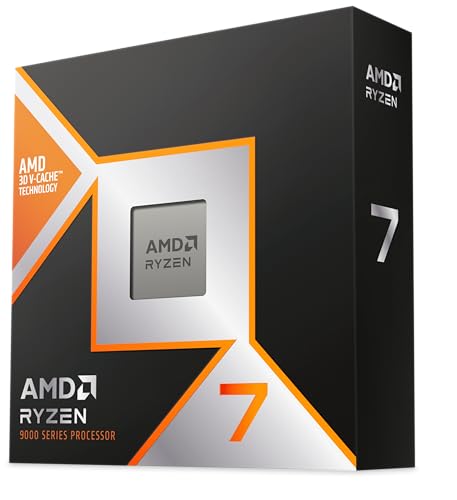
Best Premium: AMD Ryzen 7 9800X3D
Specs
Cores / threads | 8 cores, 16 threads |
Boost clock | Up to 5.2 GHz |
Cache | 96 MB L3 with 3D V-Cache |
TDP | 120 W |
Socket | AM5 |
Memory | DDR5, EXPO 6000 CL30 target |
Multiplier | Unlocked |
Cores / threads
8 cores, 16 threads
Boost clock
Up to 5.2 GHz
Cache
96 MB L3 with 3D V-Cache
TDP
120 W
Socket
AM5
Memory
DDR5, EXPO 6000 CL30 target
Multiplier
Unlocked
What it does well
The 96 MB L3 pool is the whole product. Workloads that thrash cache stop thrashing it, and the frame time graph flattens out.
That shows up in specific places. Late-game Total War turns, flight sim scenery streaming, dense MMO raid content, Escape from Tarkov, and Source 2 competitive play all lean on the processor harder than the graphics card can compensate for. TechSpot measured this chip 11% ahead of the 7800X3D on average in Baldur's Gate 3, with 1% lows 18% better, and 8% ahead in Cyberpunk 2077. It is also the first unlocked X3D part, so there is tuning headroom if you want it.
If your evenings go to the games on that list, this is the pick that changes your experience rather than your benchmark screenshot.
What you give up
On a 5070 at 1440p, most of what you paid for never reaches the screen. The card runs out of headroom first and the cache sits there with nothing to feed. Buying it here is the classic error of matching the processor the reviews were tested with instead of the one this build needs.
It draws 120 W rather than 65 W, so the cooler gets bigger and the case gets warmer. The money is not abstract either: at this tier it is the difference between a 1440p panel and a good one. If you are still weighing the two cards, our 5070 and 5070 Ti comparison is a better place to spend the same amount.
Who it's for
Sim racers, flight sim pilots, 4X and city-builder players, MMO raiders, and anyone already on a 1080p 240Hz panel who has accepted they are chasing the frame ceiling.
Best Budget: AMD Ryzen 5 7600X

Specs
Cores / threads | 6 cores, 12 threads |
Boost clock | Up to 5.3 GHz |
Cache | 32 MB L3, 6 MB L2 |
TDP | 105 W |
Socket | AM5 |
Memory | DDR5, EXPO 6000 CL30 target |
Generation | Zen 4 |
Cores / threads
6 cores, 12 threads
Boost clock
Up to 5.3 GHz
Cache
32 MB L3, 6 MB L2
TDP
105 W
Socket
AM5
Memory
DDR5, EXPO 6000 CL30 target
Generation
Zen 4
What it does well
One generation back, same socket, same result at 1440p. The 7600X keeps an RTX 5070 fed in the titles most people play, and it takes the same B650 board and the same DDR5-6000 CL30 kit as everything else here.
That last part is what makes it a budget pick rather than a compromise. The platform around it does not get cheaper or worse. Only the chip line moves, you keep the AM5 upgrade path, and the saving lands on the parts you look at every day. Dropping a tier on the graphics card changes the calculus, and the CPU picks for the RTX 5060 Ti cover why that card's eight-lane PCIe link makes the board generation part of the decision.
What you give up
Roughly 12% of gaming performance against the 9600X in Tom's Hardware's suite, and a 105 W TDP instead of 65 W. Warmer and slower is a defensible trade only when the budget is genuinely tight.
No boxed cooler either, and the gap to the 9600X is frequently small enough that the newer chip wins outright. Check both before committing. If the difference is a rounding error, take the Zen 5 part.
Who it's for
The buyer whose total budget is tight and who needs the card, the board, and a real monitor to all land in the same order.
Editor's Pick: Intel Core Ultra 7 265
Specs
Cores | 20 cores, 8 P-cores and 12 E-cores |
Boost clock | Up to 5.3 GHz |
Cache | 30 MB L3 |
Base power | 65 W |
Socket | LGA1851 |
Memory | DDR5-6400 |
Media engine | Integrated graphics with Quick Sync |
Cores
20 cores, 8 P-cores and 12 E-cores
Boost clock
Up to 5.3 GHz
Cache
30 MB L3
Base power
65 W
Socket
LGA1851
Memory
DDR5-6400
Media engine
Integrated graphics with Quick Sync
What it does well
Twenty cores, eight of them performance cores, plus a media engine that still does something AMD's does not. Quick Sync remains the stronger hardware encoder for H.264 and H.265, and having it on the processor leaves the 5070's own encoder free for whatever else is running.
For someone cutting video in Premiere or Resolve and gaming on the same machine, that combination is the argument. A sustained export in the background does not cost you the game. DDR5-6400 support comes as standard.
What you give up
Gaming is not why you buy this. Arrow Lake regressed against Intel's own 14th-generation parts in a chunk of titles at launch, and reports suggest the platform rebench never closed the gap. Buyers have flagged it consistently since.
LGA1851 also has no announced upgrade runway, which makes it a dead end next to a socket AMD has committed to through 2027. If you are not genuinely leaning on Quick Sync, every AMD pick above is the better build, and it is not close.
Who it's for
The creator who edits or streams seriously, games on the same box, and has a concrete reason to want Intel's media engine.
Bottom line
If you play at 1440p across a mixed library, buy the Ryzen 5 9600X and put the difference into your monitor. If you expect to swap the graphics card before the platform, buy the Ryzen 7 9700X. If your evenings go to flight sim, strategy, or MMO raids, or you already own a 1080p 240Hz panel, the Ryzen 7 9800X3D is the only pick here that changes what you see. If money is tight, the Ryzen 5 7600X reaches the same 1440p result. If you edit or stream on the same box, take the Intel Core Ultra 7 265. Size the power supply for the card rather than the chip, or start from a prebuilt that already has one.
FAQ
Does the RTX 5070 need a Ryzen 7 9800X3D?
No, unless your library is cache-heavy or your panel runs at 1080p 240Hz or higher. At 1440p the RTX 5070 is what limits your frame rate, so the X3D cache spends most of its time waiting on the card rather than feeding it. The chip is genuinely faster in flight sim, late-game strategy, dense MMO content, and Source 2 competitive play. If none of those match how you play, the Ryzen 5 9600X puts the same numbers on screen for far less.
Will a Ryzen 5 bottleneck an RTX 5070 at 1440p?
Not in any way you would notice. A current six-core Zen 5 chip finishes its work on a frame before the RTX 5070 finishes rendering it at 1440p, which leaves the card as the limit and the processor waiting. In practice a Ryzen 5 9600X and a chip costing twice as much land within a few frames of each other here, and the gap narrows as you raise settings. Cache-bound titles are the exception: flight sim, late-game strategy, dense MMO content.
What is the cheapest CPU that will not hold back an RTX 5070?
The Ryzen 5 7600X is the cheapest seat on AM5 that still keeps this card fed at 1440p. It sits one generation behind the 9600X and around 12% back in Tom's Hardware's gaming suite, but that gap was measured at CPU-bound settings on a far faster graphics card than the 5070. At 1440p the two land in the same place. Compare both before you commit, because the saving is often small enough that the newer chip is the better buy.
Should I go AMD or Intel for an RTX 5070 build?
AMD, unless you have a specific reason not to. AM5 has socket runway through 2027, lower idle power, and the stronger gaming line top to bottom. The case for Intel comes down to Quick Sync: if you lean on hardware H.264 or H.265 encode in Premiere or Resolve, the Core Ultra 7 265 gives you that media engine plus twenty cores on one chip. Outside that workflow the AMD picks are the better build, and LGA1851's missing upgrade path makes the call easier.
What CPU do I need for 1080p 240Hz with an RTX 5070?
This is the one case where spending up on the processor pays. At 1080p the graphics card stops being the limit in competitive titles and the chip sets your frame ceiling, which is where the Ryzen 7 9800X3D earns its price. Be honest about the panel first, though. If you own a 240Hz display but spend most of your time in AAA titles at high settings, the card will not reach those frame rates regardless of which processor is feeding it.
How much PSU wattage does an RTX 5070 build need?
750 W is the sensible floor. The RTX 5070 carries a 250 W board power rating and the processors here add either 65 W or 120 W on top, which leaves comfortable headroom for transient spikes. Wattage is only half of it. Quality matters as much, so hold to a Tier A OEM unit rated Cybenetics Gold or better. The power supply is the one component that can take everything else with it when it fails.
Related Articles

Best CPUs for the RTX 5070 Ti (2026): 5 Picks by Tier
The best CPU for an RTX 5070 Ti depends on your resolution. Five picks from budget AM5 to 16-core flagship, plus the bottleneck math for 1080p, 1440p and 4K.
Aug 11, 2026

RTX 5070 vs 5070 Ti (2026): 12 GB or 16 GB, Which Wins?
RTX 5070 vs RTX 5070 Ti: does 16 GB and 46% more cores reach your screen at 1440p or 4K? The up-tier call, answered row by row instead of by one average.
Sep 25, 2026

Best Gaming Monitors for the RTX 5070 (2026): 1440p to 4K OLED
Five monitors paired to the RTX 5070 by resolution tier: 1440p 240Hz IPS, 4K OLED, and ultrawide. Includes DLSS 4 reality check and pairing framework.
Jun 3, 2026

Best 750W PSUs for RTX 5070 Builds: 5 ATX 3.1 Picks (2026)
Best 750W PSU for an RTX 5070 build? These 5 ATX 3.1 picks skip the 850W upsell and still handle the card's transient spikes without tripping protection.
Sep 8, 2026

Best Motherboards for Ryzen 5 9600X (2026): Budget B650 Picks
The Ryzen 5 9600X is a 65W chip. Most boards overprice it. These B650 and B850 picks get you the features that matter without the tier-premium markup.
May 29, 2026