Affiliate Disclosure: As an Amazon Associate we earn from qualifying purchases. Some links may earn us a commission at no cost to you.

Best CPUs for the RX 7900 XT (2026): 5 Picks by Tier
The RX 7900 XT is a 20 GB, 315 W card built for high-refresh 1440p that stretches to entry 4K, and most people shopping for a CPU to go with it already own it. The best CPU for an RX 7900 XT is the one that keeps it fed at the resolution you play, and not a frame more.
At 4K the card sets the frame rate and the processor barely shows. At 1440p on a 165 Hz or faster panel, it starts to matter. Below are five picks by tier, from a drop-in AM4 chip that keeps your board and DDR4 to a full AM5 move.
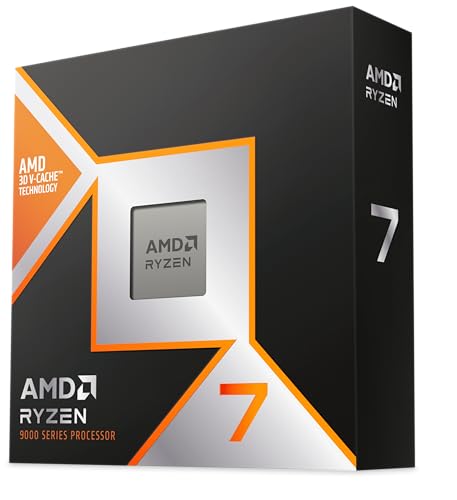
Our top pick: AMD Ryzen 7 9800X3D
The Ryzen 7 9800X3D is the chip that keeps an RX 7900 XT fed at high-refresh 1440p and in cache-heavy games, and it sits on a socket with upgrades still ahead of it.
Quick picks
Pick | CPU | Best for | Buy |
|---|---|---|---|
Best Overall | 1440p high refresh, any library | ||
Best Value | 1440p and 4K on a tighter platform budget | ||
Best Premium | Gaming plus heavy renders or compiles | ||
Best Budget | AM4 owners: keep the board and DDR4 | ||
Editor's Pick | X3D gaming on AM5 for less |
Best Overall
- CPU
- Best for
1440p high refresh, any library
- Buy
Best Value
- CPU
- Best for
1440p and 4K on a tighter platform budget
- Buy
Best Premium
- CPU
- Best for
Gaming plus heavy renders or compiles
- Buy
Best Budget
- CPU
- Best for
AM4 owners: keep the board and DDR4
- Buy
Editor's Pick
- CPU
- Best for
X3D gaming on AM5 for less
- Buy
Specs at a glance
CPU | Socket | Cores / threads | Boost clock | L3 cache | TDP |
|---|---|---|---|---|---|
AM5 | 8C / 16T | 5.2 GHz | 96 MB, second-gen 3D V-Cache | 120 W | |
AM5 | 6C / 12T | 5.3 GHz | 32 MB | 105 W | |
AM5 | 16C / 32T | 5.7 GHz | 128 MB, 3D V-Cache on one CCD | 170 W | |
AM4 | 8C / 16T | 4.5 GHz | 96 MB, first-gen 3D V-Cache | 105 W | |
AM5 | 8C / 16T | 5.0 GHz | 96 MB, first-gen 3D V-Cache | 120 W |
- Socket
AM5
- Cores / threads
8C / 16T
- Boost clock
5.2 GHz
- L3 cache
96 MB, second-gen 3D V-Cache
- TDP
120 W
- Socket
AM5
- Cores / threads
6C / 12T
- Boost clock
5.3 GHz
- L3 cache
32 MB
- TDP
105 W
- Socket
AM5
- Cores / threads
16C / 32T
- Boost clock
5.7 GHz
- L3 cache
128 MB, 3D V-Cache on one CCD
- TDP
170 W
- Socket
AM4
- Cores / threads
8C / 16T
- Boost clock
4.5 GHz
- L3 cache
96 MB, first-gen 3D V-Cache
- TDP
105 W
- Socket
AM5
- Cores / threads
8C / 16T
- Boost clock
5.0 GHz
- L3 cache
96 MB, first-gen 3D V-Cache
- TDP
120 W
Benchmarks
No reviewer has published a multi-CPU run on an RX 7900 XT at the resolutions its owners use, so both tables below come from TechSpot testing with an RTX 5090. That is the worst case for CPU differences: the fastest card on the market removes the GPU as a limit, and every gap you see here shrinks on a 7900 XT. If the mechanics are fuzzy, our explainer on how CPU and GPU bottlenecks work walks through it.
The largest CPU gap in the test, measured with the GPU removed as a limit. An RX 7900 XT renders well below this ceiling.
- 575 FPS
- 446 FPS
Relative frame rate, 9800X3D = 100. Even with the fastest card available, the AM4 drop-in sits within a few percent at 1440p Ultra.
- 100 %
- 97 %
How we picked a CPU for the RX 7900 XT
Resolution decides the processor. The CPU's job in this build is to keep the graphics card fed at your target resolution, and no further. In TechSpot's scaling tests the 9800X3D led the 7600X by about a third at 1440p Medium with an RTX 5090, yet both chips hit the GPU limit once the card dropped to an RTX 5080, and at 4K both were fully GPU-bound. The RX 7900 XT renders below both of those cards, so its CPU ceiling arrives sooner.
Second, the library. Sim racing, flight sims, late-game 4X, factory builders and dense MMO content stay CPU-bound past 1080p, and that is where 96 MB of L3 earns its place. If your drive is mostly single-player AAA at 1440p Ultra or 4K, the case to skip X3D at 1440p and 4K is strong, and our Best Value pick follows it.
Third, the socket you already own. Plenty of 7900 XT systems still run on AM4. A drop-in chip keeps the board, the DDR4 kit and the Windows install, while every AM5 pick adds a board and a DDR5 kit to the bill. We weigh both routes on platform total, not the CPU sticker.
Finally, every pick is a current Amazon listing for a new retail SKU, placed by tier rather than in one ranking. The right chip for a 4K OLED and the right chip for a 240 Hz 1440p panel are not the same chip. If you are still choosing that panel, our monitors for the RX 7900 XT are the other half of this decision.
Best Overall: AMD Ryzen 7 9800X3D
Specs
Cores / threads | 8C / 16T |
Boost clock | 5.2 GHz |
L3 cache | 96 MB, second-gen 3D V-Cache |
TDP | 120 W |
Socket | AM5 |
Memory | DDR5, 6000 CL30 sweet spot |
Cooler | Not included |
Cores / threads
8C / 16T
Boost clock
5.2 GHz
L3 cache
96 MB, second-gen 3D V-Cache
TDP
120 W
Socket
AM5
Memory
DDR5, 6000 CL30 sweet spot
Cooler
Not included
What it does well
This is the chip that raises the ceiling without asking anything awkward of the rest of the build. Second-generation 3D V-Cache sits under the compute die instead of on top of it, so the 9800X3D boosts to 5.2 GHz and sheds heat like a normal Ryzen part. The 96 MB L3 pool is what feeds sim, strategy and MMO engines that thrash cache.
On a 7900 XT that matters most at 1440p with a 165 Hz to 240 Hz panel. The card can push high frame rates in esports titles and lighter AAA games there, and a weaker chip starts to cap them. The 9800X3D keeps the 1% lows tight when a busy scene spikes the CPU load.
It is also easy to cool. A 120 W part on a decent dual-tower air cooler stays quiet, which helps in a case already carrying a 315 W graphics card.
What you give up
At 4K you are paying for headroom the card will not let you spend. TechSpot found both the 9800X3D and the 7600X fully GPU-limited at 4K, even with an RTX 5090, and the 7900 XT is a slower card than that.
The platform cost is real for AM4 owners: a board and a DDR5 kit come on top of the chip. Price it against our budget AM5 boards and DDR5 kits for gaming, not against the CPU alone. Skip the cheapest B650 boards with thin VRM heatsinks; a B-tier board with proper cooling is all an X3D chip needs.
Who it's for
Players on a 1440p 165 Hz to 240 Hz panel, anyone whose library leans on sims, strategy or MMOs, and anyone moving to AM5 who wants the platform to outlast the card.
Best Value: AMD Ryzen 5 7600X

Specs
Cores / threads | 6C / 12T |
Boost clock | 5.3 GHz |
L3 cache | 32 MB |
TDP | 105 W |
Socket | AM5 |
Memory | DDR5, 6000 CL30 sweet spot |
Cooler | Not included |
Cores / threads
6C / 12T
Boost clock
5.3 GHz
L3 cache
32 MB
TDP
105 W
Socket
AM5
Memory
DDR5, 6000 CL30 sweet spot
Cooler
Not included
What it does well
Six Zen 4 cores at 5.3 GHz are enough to keep an RX 7900 XT busy in most games at 1440p Ultra and 4K, where the card does the limiting. TechSpot's scaling data shows the 7600X and the 9800X3D both landing on the GPU limit with an RTX 5080, a card that already outruns the 7900 XT.
That leaves room in the budget for the parts that do change the experience on AM5: a board with a properly cooled VRM and a DDR5-6000 CL30 kit. You still get the socket's upgrade path, so a faster X3D chip can drop in later without touching anything else.
What you give up
Drop to 1080p, or load a cache-bound engine, and the six-core part becomes the limit. In TechSpot's 1080p Medium test with an RTX 5090 it trailed the 9800X3D by about a fifth in Rainbow Six Siege. Sims, 4X games and MMO raids punish its 32 MB of L3 at any resolution.
There is no cooler in the box, so budget for a tower cooler. Reports suggest some listings sell through third-party buy-box sellers, so confirm you are buying a new retail box before you check out. Our look at whether a Ryzen 5 is enough or you need a 7800X3D covers the trade in more depth.
Who it's for
1440p Ultra and 4K players with a mostly single-player AAA library who want AM5 and would rather put the difference into the board and memory.
Best Premium: AMD Ryzen 9 9950X3D

Specs
Cores / threads | 16C / 32T |
Boost clock | 5.7 GHz |
L3 cache | 128 MB, 3D V-Cache on one CCD |
TDP | 170 W |
Socket | AM5 |
Memory | DDR5, 6000 CL30 sweet spot |
Cooler | Not included |
Cores / threads
16C / 32T
Boost clock
5.7 GHz
L3 cache
128 MB, 3D V-Cache on one CCD
TDP
170 W
Socket
AM5
Memory
DDR5, 6000 CL30 sweet spot
Cooler
Not included
What it does well
The 9950X3D is the only chip here that gives you X3D gaming and sixteen cores in one package. One of its two compute dies carries the stacked cache, so games run on the 3D V-Cache side while renders, compiles and encodes spread across all 32 threads at up to 5.7 GHz.
In games it lands close to the 9800X3D, which means a 7900 XT gets the same cache-fed frame times. The difference shows up when the same box exports video, builds code or runs a long Blender job, where twice the cores shorten the wait on anything that scales across threads.
What you give up
For gaming alone it is overkill on this card. You pay for eight cores the 7900 XT will never ask for, and at 1440p Ultra or 4K the frame rate is the same as the cheaper X3D chips.
It also needs more care. Buyers have flagged that games depend on the chipset driver parking work on the cached die, so keep the AMD chipset driver current after every Windows update. At 170 W it wants a strong air cooler or a 360 mm AIO, and a B850 board with a well-cooled VRM rather than an entry B650. Our 9950X vs 9800X3D breakdown covers when the cores earn it.
Who it's for
Creators and developers who game on the same machine, and anyone whose working day includes renders or compiles long enough to notice.
Best Budget: AMD Ryzen 7 5800X3D

Specs
Cores / threads | 8C / 16T |
Boost clock | 4.5 GHz |
L3 cache | 96 MB, first-gen 3D V-Cache |
TDP | 105 W |
Socket | AM4 |
Memory | DDR4, 3600 CL16 sweet spot |
Cooler | Not included |
Cores / threads
8C / 16T
Boost clock
4.5 GHz
L3 cache
96 MB, first-gen 3D V-Cache
TDP
105 W
Socket
AM4
Memory
DDR4, 3600 CL16 sweet spot
Cooler
Not included
What it does well
This is the cheapest real upgrade for a 7900 XT owner still on AM4. It drops into the B450, B550 or X570 board you already have, keeps the DDR4 kit, and needs no Windows reinstall. The 96 MB of L3 is the same amount the AM5 X3D chips carry.
At the resolutions this card runs, it gives up very little. TechSpot measured it about 3 percent behind the 9800X3D in Kingdom Come: Deliverance II at 1440p Ultra with an RTX 5090. On a 7900 XT that gap shrinks further, and at 4K it is gone.
What you give up
AM4 is a dead end. No faster chip is coming for the socket, and when you do move, the board and the DDR4 kit go with the old CPU. In CPU-bound titles and at 1080p it trails the newer X3D parts by a wide margin, and the multiplier is locked.
Older B450 and X470 boards need a BIOS update before the chip will post, so flash it with the old CPU still installed. Stock is also thinning, so compare it against the AM5 total before you buy. Our AM4 vs AM5 breakdown and the best CPU upgrade from a Ryzen 5 5600 cover when the full move is worth it.
Who it's for
Owners of a Ryzen 5 3600, 5600 or 5600X class chip on an AM4 board who game at 1440p or 4K and want the frame-time gain without rebuilding the platform.
Editor's Pick: AMD Ryzen 7 7800X3D

Specs
Cores / threads | 8C / 16T |
Boost clock | 5.0 GHz |
L3 cache | 96 MB, first-gen 3D V-Cache |
TDP | 120 W |
Socket | AM5 |
Memory | DDR5, 6000 CL30 sweet spot |
Cooler | Not included |
Cores / threads
8C / 16T
Boost clock
5.0 GHz
L3 cache
96 MB, first-gen 3D V-Cache
TDP
120 W
Socket
AM5
Memory
DDR5, 6000 CL30 sweet spot
Cooler
Not included
What it does well
The 7800X3D carries the same 96 MB L3 pool as the 9800X3D, and on a 7900 XT that is most of what matters for gaming. At 1440p and 4K the card does the limiting in most titles, so the gap between the two X3D chips shrinks to a few frames.
Against the AM4 drop-in it is a different class of chip. TechSpot measured it 38 to 41 percent faster than the 5800X3D in CPU-limited Hogwarts Legacy at 1080p and 1440p with an RTX 4090, which is the headroom that carries into a future GPU upgrade.
What you give up
First-generation V-Cache sits on top of the compute die, which caps boost at 5.0 GHz and makes it run warmer under the same cooler. It is also slower than the 9800X3D in threaded work, because Zen 4 gives up some IPC to Zen 5.
Inside a small price gap, the newer chip wins on thermals. Check the two listings side by side before you settle, and read our verdict on whether the 7800X3D is still worth it if the gap is narrow.
Who it's for
1440p high-refresh players moving to AM5 who want the X3D benefit without paying for the newest silicon.
Bottom line
If you game at high-refresh 1440p or play sims, strategy or MMOs, buy the AMD Ryzen 7 9800X3D. If you play single-player AAA at 1440p Ultra or 4K and want AM5 on a budget, buy the AMD Ryzen 5 7600X. If the same box renders or compiles for a living, buy the AMD Ryzen 9 9950X3D. If you are on AM4 and game at 1440p or 4K, drop in the AMD Ryzen 7 5800X3D and keep your board. If you want X3D on AM5 for less, buy the AMD Ryzen 7 7800X3D. Owners of the bigger card can compare our CPU picks for the RX 7900 XTX.
FAQ
Does the RX 7900 XT need an X3D CPU?
Only if your resolution or your library makes the CPU the limiter. At 4K the card runs out of headroom first, and reviewer testing shows CPUs converging there even on a faster RTX 5090. At high-refresh 1440p, or in cache-heavy sims, strategy games and MMOs, the extra L3 lifts frame rates and 1% lows. For a single-player AAA library at 1440p Ultra or 4K, a Ryzen 5 7600X is the better use of the money.
Will a Ryzen 5 7600X bottleneck the RX 7900 XT?
Not at 1440p Ultra or 4K in most games, because the graphics card does the limiting there. TechSpot found the 7600X and the 9800X3D both GPU-bound with an RTX 5080, a card faster than the 7900 XT. It does fall behind at 1080p with settings turned down and in cache-bound engines, so competitive players on a 240 Hz panel should step up to an X3D chip.
Should RX 7900 XT owners on AM4 move to AM5?
Move if you play at high-refresh 1440p, lean on cache-bound games, or plan to keep the platform through another GPU upgrade. Stay on AM4 with a Ryzen 7 5800X3D if you play at 1440p Ultra or 4K, because the card sets the frame rate there and a new board plus a DDR5 kit buys little. Flash the BIOS first if your board is a B450 or X470.
What CPU should you pair with an RX 7900 XT at 1440p?
On a 1440p panel at 165 Hz or faster, the Ryzen 7 9800X3D is the pick that keeps the card fed in every kind of game. The Ryzen 7 7800X3D gets you most of the way for less. At 1440p Ultra with a 144 Hz panel and a mostly AAA library, the Ryzen 5 7600X is enough, and the savings are better spent on the board and a DDR5-6000 CL30 kit.
Is the Ryzen 9 9950X3D overkill for an RX 7900 XT?
For gaming alone, yes. It lands close to the 9800X3D in games, so the 7900 XT sees the same frame rates, and you pay for eight extra cores the card never uses. It earns its price when the same machine renders video, compiles code or runs long simulations. If that is not your workload, buy the 9800X3D and spend the difference elsewhere.
Related Articles

Best Gaming Monitors for the RX 7900 XT (2026): 5 Picks
The best monitor for RX 7900 XT owners, matched to real frame rates: a 1440p QD-OLED, mini-LED value, a 34-inch ultrawide, and when 4K at 160Hz makes sense.
Oct 17, 2026

Best CPUs for the RX 7900 XTX (2026): 5 Picks by Tier
The best CPU for an RX 7900 XTX depends on your panel and your socket. Five picks by tier, from a drop-in AM4 X3D upgrade to a full AM5 platform move.
Oct 17, 2026

AM4 vs AM5 in 2026: Is AM4 Still Worth It? (5 CPU Picks)
AM4 vs AM5 in 2026: AM5 still wins most new gaming builds despite DDR5 prices, but AM4 is the smarter buy below one budget line. See where it flips + 5 picks.
Oct 15, 2026

Best CPUs for the RX 9070 XT (2026): 5 Picks by Tier
The best CPU for an RX 9070 XT depends on your resolution. Five AM5 picks by tier, plus the point where the CPU gap disappears and the real platform cost.
Sep 4, 2026

How to Choose a CPU and Motherboard
The buyer's framework for picking a CPU and motherboard pair: use case first, socket second, chip tier third, then the board class that matches.
May 17, 2026