Affiliate Disclosure: As an Amazon Associate we earn from qualifying purchases. Some links may earn us a commission at no cost to you.

RX 9060 XT vs 9070 (2026): Is 16GB Enough for 1440p?
The RX 9060 XT 16GB clears 1080p and most of 1440p at high settings on its own. It runs into real trouble once you push 1440p ultra, sitting right at the edge of smooth instead of comfortably ahead, and that's exactly where the RX 9070 earns its keep. If you're building at 1080p or 1440p high, the 9060 XT is enough. If ultra settings at 1440p are non-negotiable, or you're eyeing early 4K, the step-up pays for itself.
Below is the verdict, backed by real benchmarks and buyable picks at each tier. For the full framework behind picking a GPU and monitor pair, see our guide to choosing a GPU and display.
At a glance
Card | VRAM | Memory bus | TBP | Best for | Buy |
|---|---|---|---|---|---|
16GB GDDR6 | 128-bit | 160W | 1080p and 1440p high | ||
16GB GDDR6 | 256-bit | 220W | 1440p ultra and RT-heavy AAA |
- VRAM
16GB GDDR6
- Memory bus
128-bit
- TBP
160W
- Best for
1080p and 1440p high
- Buy
- VRAM
16GB GDDR6
- Memory bus
256-bit
- TBP
220W
- Best for
1440p ultra and RT-heavy AAA
- Buy
Same generation, same 16GB VRAM ceiling on both cards, but a very different memory bus and power budget underneath. That 128-bit versus 256-bit split is the single biggest predictor of which card fits your monitor and settings target, more than the price tag or the marketing tier name.
Is the 9060 XT enough? The scenario matrix
Scenario | Verdict | Winner |
|---|---|---|
1080p, any settings | The 9060 XT clears this tier with room to spare. No reason to spend more. | |
1440p, high settings | The 9060 XT is enough here too, with room to spare below ultra. | |
1440p, ultra settings | The 9060 XT sits right at the edge of smooth, no real headroom left. The 9070 is the real answer here. |
1080p, any settings
- Verdict
The 9060 XT clears this tier with room to spare. No reason to spend more.
- Winner
1440p, high settings
- Verdict
The 9060 XT is enough here too, with room to spare below ultra.
- Winner
1440p, ultra settings
- Verdict
The 9060 XT sits right at the edge of smooth, no real headroom left. The 9070 is the real answer here.
- Winner
Notice that two of the three scenarios land on the cheaper card. That's the actual point of this article: most 1440p buyers don't need the step-up, and the ones who do need it for a specific, identifiable reason (ultra settings at 1440p) rather than a vague sense that more expensive is safer.
Benchmarks
Two paired data points from the same reviewer, same test rig, make the case cleanly: a AAA title at ultra settings where the gap is widest, and a second AAA title at high settings where the 9060 XT holds up better. The gap isn't uniform across every game or setting. It widens the moment ultra settings and higher resolution stack together, and narrows in lighter or lower-preset scenarios.
That pattern is the entire argument for a tier-sufficiency framing instead of a flat versus. A buyer running high settings at 1440p loses almost nothing by staying on the 9060 XT. A buyer who wants ultra settings at 1440p gets a card sitting right at the edge of smooth on the 9060 XT, and one with real headroom on the 9070. Same generation, same 16GB VRAM ceiling, different verdict depending on what settings tier is actually being asked of the card.
The 9060 XT's 128-bit bus leaves it right at the edge of smooth; the 9070's 256-bit bus and higher compute give it real headroom at the same settings.
- RX 9060 XT 16GB64 FPS
- RX 907077 FPS
The wider gap here shows up in a heavier, more shader-bound title, where the 9070's extra compute matters more than in Cyberpunk 2077 at the same resolution.
- RX 9060 XT 16GB49 FPS
- RX 907075 FPS
Recommended: XFX Swift RX 9060 XT OC (16GB)
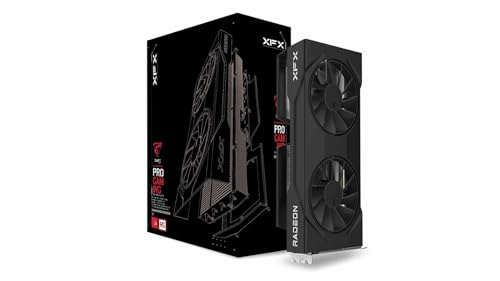
Specs
Chip | AMD Radeon RX 9060 XT (RDNA 4, Navi 44) |
VRAM | 16GB GDDR6 |
Memory bus | 128-bit |
Boost clock | up to 3,130 MHz (XFX Swift OC) |
TBP | 160W |
Slots | 2.5-slot |
Outputs | HDMI 2.1b, 2x DisplayPort |
PCIe | 5.0 x8 |
Chip
AMD Radeon RX 9060 XT (RDNA 4, Navi 44)
VRAM
16GB GDDR6
Memory bus
128-bit
Boost clock
up to 3,130 MHz (XFX Swift OC)
TBP
160W
Slots
2.5-slot
Outputs
HDMI 2.1b, 2x DisplayPort
PCIe
5.0 x8
What it does well
The 16GB buffer is the whole pitch. Newer UE5 titles are pushing texture budgets past what an 8GB card can hold at 1440p, and this is the cheapest RDNA 4 card that sidesteps that ceiling entirely. At a 160W TBP, it runs comfortably on a 550 to 650W PSU most builders already own, and it never asks for more than a two-slot cutout plus a little breathing room.
RDNA 4's video encode block and FSR 4 upscaling both carry over from the flagship tier, so the card isn't missing features, just raw bandwidth. For 1080p and 1440p at high settings, that tradeoff barely shows up in the actual experience. Streamers and anyone doing light content creation on the side also get the full RDNA 4 encoder, not a cut-down version reserved for the pricier cards in the stack.
160W is a small enough power draw that it also opens up small-form-factor builds that would choke on the RX 9070's 220W or the RX 9070 XT's 304W. If the target case has tight airflow or a modest PSU already installed, the 9060 XT is often the only card in this stack that fits without a rebuild.
What you give up
The 128-bit memory bus is the real ceiling. Push into 1440p ultra and the card lands right around 64 fps in a title like Cyberpunk 2077, playable but with no real headroom, and it drops further in heavier, more shader-bound titles like Black Myth: Wukong (49 fps at just 1440p high). This is a card sized for 1080p and 1440p high, not 1440p ultra. That ceiling is also what settles the panel decision: our monitor picks for the RX 9060 XT map the card's measured 1440p output onto a refresh tier instead of a spec-sheet number.
Buyers scanning listings should also confirm they're buying the 16GB SKU. The RX 9060 XT ships in both 8GB and 16GB configurations across the same AIB families, and the naming doesn't always make the distinction obvious at a glance. The 8GB card is a meaningfully different buy for anyone planning to hold onto the GPU past a year or two. The same trap catches anyone who held out for Intel's answer in this tier, because what to buy instead of the Arc B770 runs the same 16GB ladder across all three vendors.
There's also less overclocking margin here than on the bigger cards in the stack. The 128-bit bus is the bottleneck long before the core clock is, so chasing a higher factory OC on this specific card buys less real-world uplift than it would on the RX 9070 or 9070 XT.
Who it's for
Builders locked to 1080p, or 1440p at high settings rather than ultra, who want 16GB of headroom for the next two or three years without spending 9070 money. It's also the pragmatic pick for anyone building in a smaller case where a 220W-plus card would strain the existing PSU or airflow budget. That headroom is also what clears new requirement floors. World of Warcraft: Forever moved its recommended tier to an 8 GB DirectX 12 card, and our guide to whether your GPU is enough for WoW Forever names the 9060 XT as the pick that clears it with room to spare.
If ultra settings at 1440p matter to you, keep reading, the step-up section below is written for exactly that reader.
Not sure how much video memory your resolution and settings target needs? Our VRAM buying guide breaks down the ceiling by resolution.
Step-up: XFX Swift RX 9070 OC

Specs
Chip | AMD Radeon RX 9070 (RDNA 4, Navi 48) |
VRAM | 16GB GDDR6 |
Memory bus | 256-bit |
Boost clock | up to 2,970 MHz (XFX Swift OC) |
TBP | 220W |
Slots | 3-slot (Triple Fan) |
Outputs | HDMI 2.1b, 3x DisplayPort 2.1a |
PCIe | 5.0 x16 |
Chip
AMD Radeon RX 9070 (RDNA 4, Navi 48)
VRAM
16GB GDDR6
Memory bus
256-bit
Boost clock
up to 2,970 MHz (XFX Swift OC)
TBP
220W
Slots
3-slot (Triple Fan)
Outputs
HDMI 2.1b, 3x DisplayPort 2.1a
PCIe
5.0 x16
What it does well
Double the memory bus of the 9060 XT and a real jump in compute is what clears 1440p ultra with room to spare. In GamersNexus's paired testing on the same rig, the 9070 posted 77 fps average in Cyberpunk 2077 at 1440p ultra against the 9060 XT 16GB's 64 fps at the same settings, and the gap widens further in heavier titles like Black Myth: Wukong (75 fps versus 49 fps at 1440p high). That margin is the whole case for spending more.
The extra headroom also means the 9070 isn't just clearing 1440p ultra today, it's got margin for whatever ships over the next couple of years without dropping settings. Triple-fan cooling on this specific card keeps the boost clock closer to its ceiling under sustained load than a cramped two-slot design would, which matters more the harder the card is working.
Three DisplayPort 2.1a outputs also future-proof the card for the current wave of 240Hz-plus 1440p panels, where DisplayPort 2.1a's higher bandwidth avoids the compression artifacts some 1.4-only cards run into at that combination of resolution and refresh rate.
What you give up
220W TBP against the 9060 XT's 160W means a real conversation about PSU headroom and case airflow, especially in smaller builds. It's also priced meaningfully above the 9060 XT, and that premium is wasted on a buyer who's only gaming at 1080p or 1440p high, tiers the cheaper card already clears. Anyone arriving from the cheaper end of the market has a different first question, which is whether the Arc B580's 12GB is enough for 1440p.
The triple-fan cooler is also physically larger than the 9060 XT's shroud, which matters in cases with tight GPU clearance. Measure before buying if the case is already on the smaller side.
Who it's for
1440p-ultra players and anyone running heavier, more shader-bound AAA titles who wants real margin instead of settling for high instead of ultra. It's also the sensible pick for a build meant to last through the next couple of GPU generations without a settings downgrade.
If your monitor and settings target don't need that margin, the recommended pick above already does the job for meaningfully less money.
Wondering if the full 9070 XT is worth the jump instead? Our RX 9070 vs RX 9070 XT breakdown covers that comparison in depth.
Ceiling: XFX Swift RX 9070 XT

Specs
Chip | AMD Radeon RX 9070 XT (RDNA 4, Navi 48) |
VRAM | 16GB GDDR6 |
Memory bus | 256-bit |
Boost clock | up to 2,970 MHz |
TBP | 304W |
Slots | 3-slot (Triple Fan) |
Outputs | HDMI 2.1b, 3x DisplayPort 2.1a |
PCIe | 5.0 x16 |
Chip
AMD Radeon RX 9070 XT (RDNA 4, Navi 48)
VRAM
16GB GDDR6
Memory bus
256-bit
Boost clock
up to 2,970 MHz
TBP
304W
Slots
3-slot (Triple Fan)
Outputs
HDMI 2.1b, 3x DisplayPort 2.1a
PCIe
5.0 x16
What it does well
Same 16GB, 256-bit foundation as the 9070, with meaningfully more compute and a 304W TBP to back it up. It's the card to buy if early 4K or the heaviest path-tracing titles are the actual target, and the one to reach for if you'd rather not think about a GPU upgrade again for a while.
The extra compute over the standard 9070 shows up most in path-tracing-heavy titles, where the 9070 starts to strain even at 1440p ultra. At 4K, that same margin is what keeps the 9070 XT in playable territory where the standard 9070 is already compromising on settings.
What you give up
304W TBP means a real PSU and case-airflow conversation, not an afterthought, and the price jump over the 9070 is the widest step in this stack. If you're not actually 4K-bound, that jump buys headroom you won't use.
Case clearance is also worth double-checking. The triple-fan cooler needed to keep 304W in check is long, and it's the tightest fit of the three cards in this stack in a mid-tower with front-mounted radiators or drive cages nearby.
Who it's for
Buyers explicitly targeting 4K or the heaviest, most demanding AAA titles at ultra settings. If your target is 1440p in any form, the recommended or step-up pick above is the better buy for the money. Weighing Nvidia instead for that same 4K target? our RTX 5070 Ti vs RTX 5080 4K sufficiency verdict walks through the equivalent call on the green side.
A 304W card needs real PSU headroom, not just a rated-wattage sticker. Our PSU picks for RX 9070-class builds covers what to buy alongside it. The same headroom-versus-cost question shows up at the very top of the stack too; see our verdict on whether the RTX 5090 is worth it for gaming for the Nvidia-side version of this call.
Bottom line
If you're building at 1080p or 1440p high, buy the XFX Swift RX 9060 XT OC (16GB). It clears both tiers cleanly and the extra 16GB of VRAM gives it real staying power.
If 1440p ultra is non-negotiable, buy the XFX Swift RX 9070 OC. The real, measured gap in heavier titles like Black Myth: Wukong is the whole reason it exists as a separate tier.
If you're eyeing early 4K or the heaviest AAA titles at max settings, the XFX Swift RX 9070 XT is the ceiling worth paying for. Everyone else is overspending.
FAQ
Is the RX 9060 XT good enough for 1440p gaming?
Yes, at high settings. The RX 9060 XT 16GB comfortably handles 1440p as long as you're not pushing ultra settings. Push to ultra and the 128-bit memory bus becomes the bottleneck, landing the card right at the edge of smooth rather than comfortably ahead of it, and that's the scenario where the RX 9070 is the better buy.
How much faster is the RX 9070 than the RX 9060 XT?
It depends heavily on the game and settings. In GamersNexus's paired testing, the RX 9070 ran about 20% faster in Cyberpunk 2077 at 1440p ultra (77 fps versus 64 fps) and about 53% faster in the heavier Black Myth: Wukong at 1440p high (75 fps versus 49 fps). Heavier, more shader-bound titles widen the gap; lighter titles narrow it.
Is the 16GB RX 9060 XT enough VRAM for modern games?
Yes. 16GB is comfortably ahead of what current games need at 1080p and 1440p, and it's the reason to pick the 16GB SKU over the 8GB variant of the same card. The 8GB version is a materially different buy for anyone planning to keep the card more than a year or two.
Should I get the RX 9060 XT, RX 9070, or RX 9070 XT?
Match the card to your resolution and settings target, not your budget alone. The RX 9060 XT covers 1080p and 1440p high. The RX 9070 is for 1440p ultra. The RX 9070 XT is for buyers targeting early 4K or the heaviest AAA titles at max settings. Buying past your actual target just spends money on headroom you won't use, and buying under your target means dropping settings you paid for a monitor to display.
Does the RX 9060 XT handle ray tracing?
It has the same hardware ray tracing support as the rest of the RDNA 4 stack, so it runs ray-traced titles rather than lacking the feature entirely. The 128-bit memory bus is the limiting factor, the same bottleneck that shows up at 1440p ultra in rasterized titles, so ray tracing is best kept to 1080p or dialed back at 1440p on this specific card. The RX 9070's wider bus gives it more headroom for ray tracing at higher settings.
Is the RX 9070 worth the price jump over the RX 9060 XT?
Only if you're using the extra headroom. If your target is 1440p ultra, the measured gap in heavier titles like Black Myth: Wukong justifies the jump. If you're gaming at 1080p or 1440p high, the RX 9060 XT already clears those tiers and the extra spend buys nothing you'll notice.
Related Articles

RX 9070 vs RX 9070 XT: FPS in 30 Games at 1440p and 4K
RX 9070 vs RX 9070 XT in 30 games: the XT leads 1440p raster by about 10%, and draws 84W more. See which RDNA 4 card fits your PSU and panel.
Oct 25, 2026

How Much VRAM Do You Need for Gaming? (2026 Guide)
How much VRAM do you need for gaming in 2026? A per-resolution VRAM tier guide for 1080p, 1440p, and 4K, with GPU picks at every tier from 8GB to 16GB.
Jun 18, 2026

Best PSU for RX 9070 (2026): 750W or 850W? 5 Top Picks
The best PSU for an RX 9070 is 750W with ATX 3.1, or 850W with a high-end CPU. Its 220W TDP spikes to 830W, so transient response decides it, not wattage.
Aug 21, 2026

How to Choose a GPU (and a Monitor That Matches)
A buyer's framework for picking a GPU and the monitor that pairs with it. Start with the panel and work the card back.
May 17, 2026

Best PSU for RX 7900 XTX: 850W Sweet Spot, 5 Picks (2026)
The best PSU for an RX 7900 XTX is a quality 850W ATX 3.1 unit. Five vetted picks for standard, value, overclocked, 750W and SFF builds, plus the wattage math.
Oct 27, 2026